
If you have never paid close attention to your menstrual cycle before, starting can feel overwhelming. There are apps, thermometers, charts, and a flood of conflicting advice online. The good news is that learning how to track your menstrual cycle does not require expensive gadgets or a medical degree. It starts with understanding what your cycle is, what it is telling you, and which method suits your life.
This guide walks you through everything — the phases of the menstrual cycle, the hormones involved, what symptoms to watch for, and a step-by-step tracking plan you can start today.
Quick Answer: To track your menstrual cycle for the first time, mark the first day of your period as Day 1. Count each day until your next period begins. That total is your cycle length. A normal menstrual cycle length is 21 to 35 days. Repeat for 2–3 months to see your personal pattern.
What Is a Menstrual Cycle?
A menstrual cycle is the monthly series of hormonal changes your body goes through to prepare for a possible pregnancy. It begins on the first day of your period and ends the day before your next period starts.
The average menstrual cycle length is 28 days, but this varies widely from person to person. According to the American College of Obstetricians and Gynecologists (ACOG), a normal menstrual cycle length ranges from 21 to 35 days. What matters most is what is normal for you, not a textbook number.
When you understand your own cycle, you gain insights into your fertility, energy levels, moods, and overall health — all of which change across the stages of the menstrual cycle.
The 4 Phases of the Menstrual Cycle
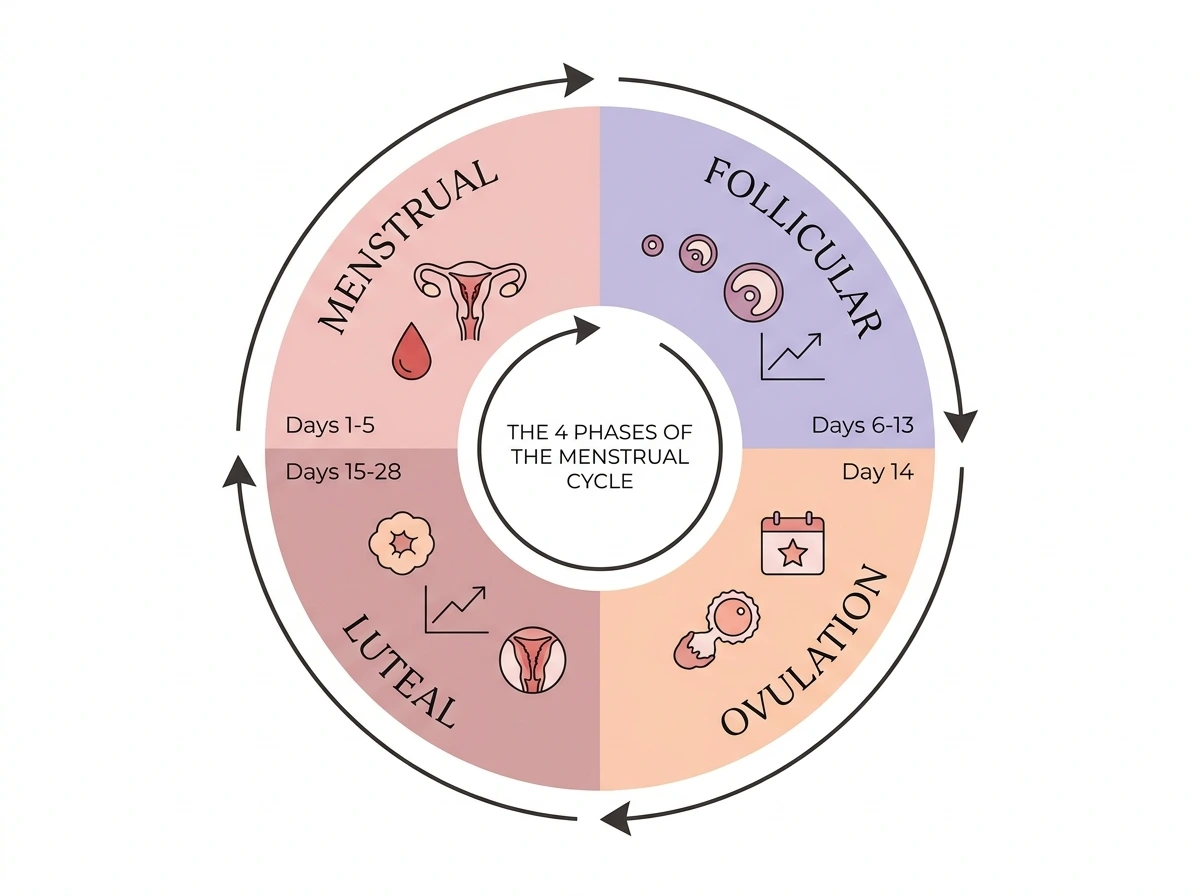
Your cycle is not just about your period. There are 4 phases of the menstrual cycle, each driven by different hormones and producing different effects in your body.
| Phase | Days (28-Day Cycle) | Key Hormones | How You Feel |
| Menstrual Phase | Days 1–5 | Estrogen & progesterone drop | Low energy, cramping, introspective |
| Follicular Phase | Days 1–13 | FSH rises, Estrogen builds | Energy returns, mood lifts, sociable |
| Ovulation Phase | Around Day 14 | LH surges, Estrogen peaks | High energy, confident, social peak |
| Luteal Phase | Days 15–28 | Progesterone rises then drops | Calm then PMS symptoms emerge |
Phase 1 — The Menstrual Phase (Days 1–5)
This is when your period occurs. The uterine lining sheds because no fertilised egg is implanted. Estrogen and progesterone are at their lowest. Many women feel low energy, cramping, and a need to slow down during these menstrual cycle days. This is completely normal.
Phase 2 — The Follicular Phase (Days 1–13)
The follicular phase of the menstrual cycle overlaps with your period and continues after it ends. The pituitary gland releases follicle-stimulating hormone (FSH), which stimulates follicles in your ovaries to grow. As follicles develop, they produce estrogen, which gradually rebuilds the uterine lining. Energy and mood typically improve during this phase.
Phase 3 — The Ovulation Phase (Around Day 14)
Ovulation is when a mature egg is released from the ovary. A spike in luteinising hormone (LH) triggers this release. This is your most fertile point in the cycle. If you want to know when does ovulation occur in the menstrual cycle, it is typically 14 days before your next period — not necessarily Day 14 from your last period, especially if your cycle is shorter or longer than 28 days.
You can track ovulation using our free ovulation calculator, which estimates your fertile window based on your cycle length and last period date.
Phase 4 — The Luteal Phase (Days 15–28)
The luteal phase of the menstrual cycle begins after ovulation. The empty follicle transforms into the corpus luteum, which produces progesterone to prepare the uterine lining for implantation. If no egg is fertilised, the corpus luteum breaks down, progesterone drops, and your period begins again.
The luteal phase typically lasts 12–16 days. Many women experience PMS symptoms — bloating, mood changes, breast tenderness — in the later days of this phase as progesterone declines.
Important: If your luteal phase is consistently shorter than 10 days, this can affect your ability to conceive. Speak to a doctor if you suspect this.
Menstrual Cycle Hormones: What Is Happening Inside Your Body
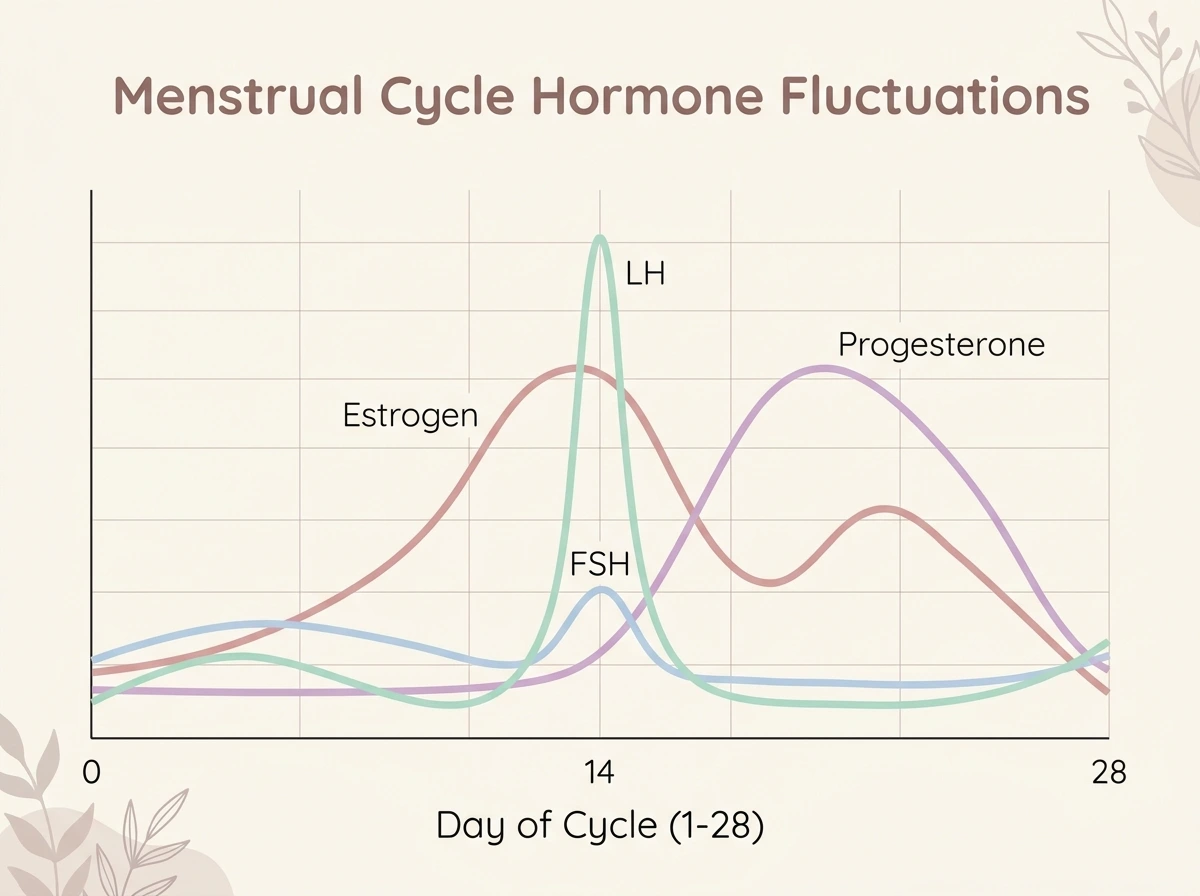
Understanding menstrual cycle hormones helps you make sense of the physical and emotional changes you experience throughout the month. Four key hormones drive your cycle:
- Oestrogen (Estrogen) — Rises in the follicular phase; rebuilds the uterine lining and boosts energy and mood.
- Progesterone — Rises after ovulation in the luteal phase; supports implantation; drop triggers your period.
- FSH (Follicle-Stimulating Hormone) — Triggers follicle growth in the early follicular phase.
- LH (Luteinising Hormone) — Surges just before ovulation to trigger egg release.
These hormone levels during the menstrual cycle follow a predictable pattern each cycle. When hormones are in balance, cycles tend to be regular. Disruptions — from stress, illness, or conditions like PCOS — can shift this pattern, causing irregular menstrual cycles.
Menstrual Cycle Symptoms Phase by Phase
One of the most useful things tracking gives you is the ability to predict how you will feel. Here is what to expect across the phases of the menstrual cycle and their symptoms:
| Phase | Common Physical Symptoms | Common Mood / Energy |
| Menstrual | Cramps, bloating, lower back pain, fatigue | Low, withdrawn, need for rest |
| Follicular | Increasing energy, cervical mucus changes | Motivated, optimistic, social |
| Ovulation | Mild pelvic pain, clear egg-white discharge, slight temp drop | Confident, outgoing, peak libido |
| Luteal (early) | Mild bloating, breast tenderness | Calm, focused, productive |
| Luteal (late) | PMS: bloating, mood swings, irritability, food cravings | Irritable, anxious, fatigued |
Tracking these menstrual cycle symptoms alongside your cycle dates is one of the most powerful things you can do. Over 2–3 months, patterns become clear and you can prepare — whether that means scheduling rest, important work meetings, or social events around your natural energy curve.
If you want to go deeper on what physical signs appear around ovulation, our ovulation symptoms guide covers all 10 key signs to watch for.
How to Track Your Menstrual Cycle: Step-by-Step
Here is a practical method for beginners who want to know how to track their menstrual cycle without being overwhelmed.
Step 1 — Mark Day 1
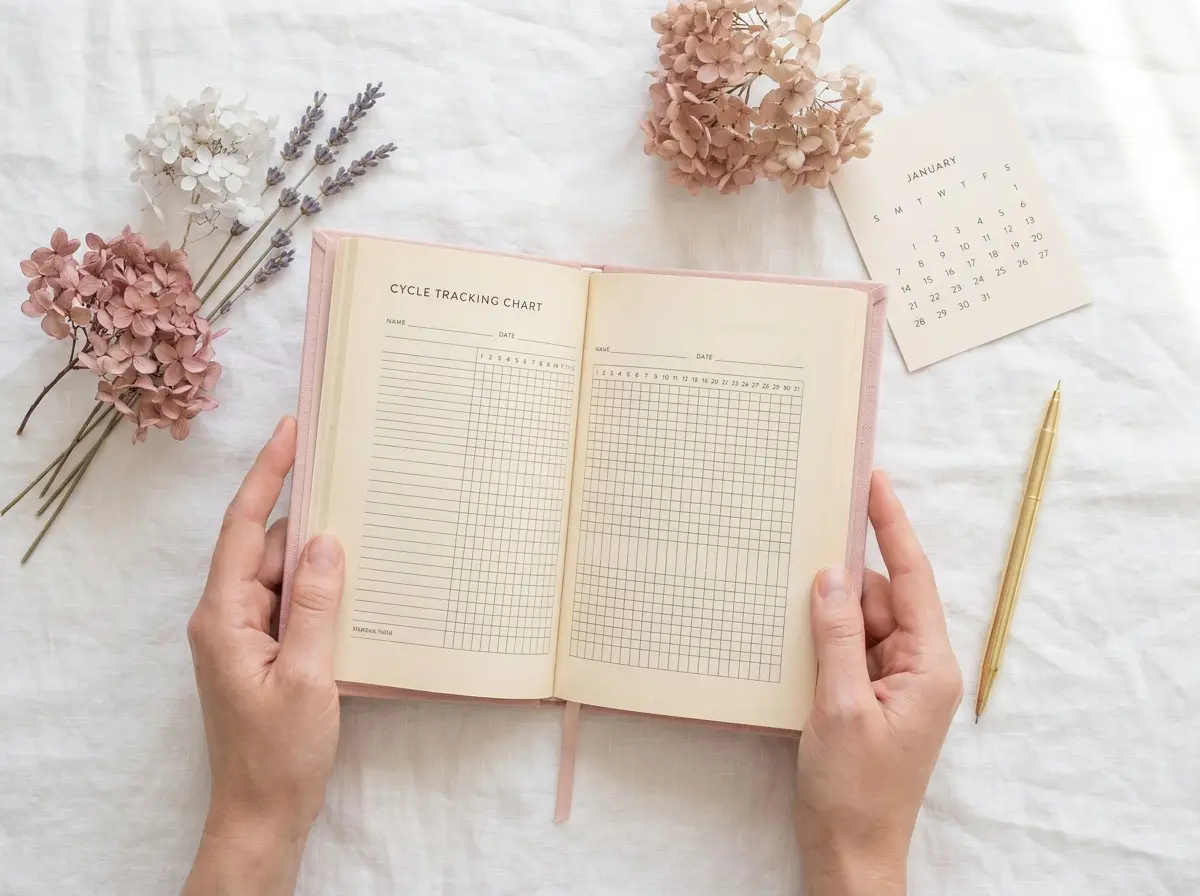
Day 1 of your menstrual cycle is the first day of full bleeding (not spotting). Write this date down or log it in an app. This is the most important data point you have.
Step 2 — Count Every Day Until Your Next Period
Every day from Day 1 up to (but not including) the first day of your next period counts. This total is your menstrual cycle length. Most women find their cycle is somewhere between 24 and 35 days. A cycle outside this range occasionally is common; a consistent pattern outside 21–35 days is worth discussing with a doctor.
Step 3 — Note Your Symptoms Daily
Each day, take 30 seconds to log:
- Flow (none / spotting / light / medium / heavy)
- Physical symptoms (cramps, bloating, breast tenderness)
- Cervical mucus (dry / creamy / watery / egg-white)
- Mood and energy (1–10 scale works well)
- Sleep quality
After two or three cycles, the different phases of your menstrual cycle will become clear in the data. You will start to see when your energy peaks, when PMS tends to arrive, and which days you ovulate.
Step 4 — Identify Your Fertile Window
Once you know your average cycle length, you can estimate when ovulation occurs. In a 28-day cycle, ovulation typically happens around Day 14. In a 30-day cycle, it is closer to Day 16. In a 21-day cycle, ovulation may happen as early as Day 7.
The easiest way to pinpoint this is to use our free ovulation calculator, which does the maths for you instantly. Just enter your last period date and average cycle length.
Step 5 — Track for at Least 3 Cycles
One cycle gives you a starting point. Three cycles give you a pattern. After that, you will know your average menstrual cycle length, typical ovulation window, and personal symptom timeline with much greater accuracy.
Menstrual Cycle Tracking Methods Compared
There is no single right way to track your menstrual cycle. Different methods suit different goals and lifestyles.
| Method | Best For | Effort Level | Accuracy |
| Calendar / App | Beginners tracking cycle length | Low | Good for regular cycles |
| BBT (Basal Body Temp) | Confirming ovulation after the fact | Medium | High when done consistently |
| Cervical Mucus | Predicting ovulation in advance | Medium | High when well-learned |
| OPK Test Strips | Predicting LH surge / ovulation | Medium | Very high |
| Ovulation Calculator | Quick fertile window estimate | Very low | Good for regular cycles |
Option 1 — Menstrual Cycle Tracking Apps
Apps are the easiest entry point. They store your data, calculate averages, predict your next period and fertile window, and send reminders. Look for apps that let you log symptoms, not just period dates. The best menstrual cycle tracking apps in 2025 include Clue, Flo, and Natural Cycles — each with different strengths depending on whether you are tracking for health awareness, contraception, or conception.
Option 2 — Basal Body Temperature (BBT) Charting
Your BBT — your temperature when you first wake up before getting out of bed — drops slightly just before ovulation, then rises by roughly 0.2°C and stays elevated through the luteal phase. Charting this over months creates a clear picture of your menstrual cycle phases. You will need a basal thermometer (accurate to two decimal places) and consistent timing.
Option 3 — Ovulation Predictor Kits (OPKs)
OPK strips detect the LH surge that happens 24–36 hours before ovulation. They are inexpensive, easy to use, and give clear results. Most women begin testing a few days before their estimated ovulation date. A positive OPK means ovulation is imminent — usually within 12–36 hours.
Option 4 — Cervical Mucus Observation
Cervical mucus changes throughout your menstrual cycle in a predictable pattern. After your period, you may notice very little discharge (dry phase), then a progression to creamy, then watery, and finally egg-white mucus — which signals peak fertility. After ovulation, mucus becomes thick or disappears again. This method takes a few cycles to learn but costs nothing.
What If Your Menstrual Cycle Is Irregular?
An irregular menstrual cycle is one that consistently falls outside the 21–35 day range, or one that varies by more than 7–9 days from cycle to cycle. Common causes include:
- PCOS (Polycystic Ovary Syndrome)
- Thyroid disorders (both hypo and hyperthyroidism)
- High stress levels, which suppress GnRH and disrupt the hormonal cascade
- Significant weight changes (both gain and loss)
- Perimenopause
- Intense exercise
- Certain medications
If your cycle is irregular, calendar tracking alone may not reliably predict ovulation. In this case, combining methods — OPK strips alongside the ovulation calculator — gives a much clearer picture. You can also read our detailed post on late ovulation: causes, symptoms and how to get pregnant, which covers ovulation outside the typical window.
If you have always had irregular cycles or they have recently changed significantly, speak to your GP. Sudden changes in menstrual cycle length can sometimes indicate an underlying condition worth investigating.
Menstrual Cycle Phases and Moods: Understanding Your Emotional Cycle
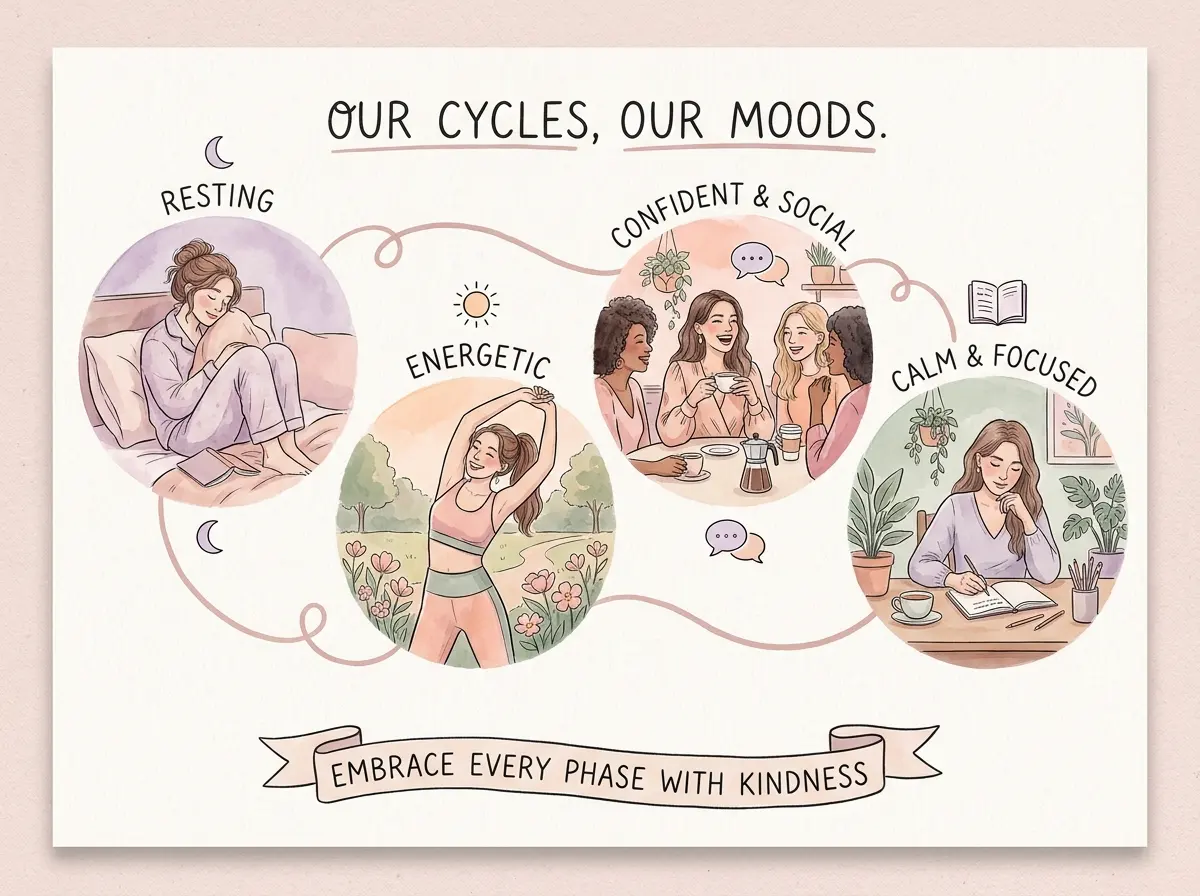
One of the most underappreciated benefits of tracking is understanding menstrual cycle phases and moods. Hormonal fluctuations have a direct impact on neurotransmitters, including serotonin and dopamine, which regulate mood, motivation, and emotional sensitivity.
Here is a rough guide to how you feel at different stages of the menstrual cycle:
- Menstrual Phase: Introspective, emotional, lower social drive. Good time for rest and reflection.
- Follicular Phase: Rising optimism and energy. Good for starting new projects and social plans.
- Ovulation Phase: Peak confidence and communication. Best time for presentations, meetings, and social events.
- Luteal Phase (early): Focused and detail-oriented. Good for admin, deep work, editing.
- Luteal Phase (late): Increasing sensitivity and irritability. Good time to slow down and prepare for rest.
Tracking your menstrual cycle phases and moods together over several months makes these patterns personal and predictive. Many women find that knowing their cycle phases reduces frustration with seemingly random mood shifts — because they stop being random.
Cycle syncing: Some women intentionally align their work, exercise, diet, and social life with the different phases of their menstrual cycle to make the most of their natural energy patterns. This approach is supported by emerging research on female hormonal rhythms.

Frequently Asked Questions
What is Day 1 of the menstrual cycle?
Day 1 is the first day of full menstrual bleeding — not spotting. This is the universally accepted starting point for counting your cycle.
How long is a normal menstrual cycle?
A normal menstrual cycle length is 21 to 35 days, according to ACOG. The average is around 28 days, but anything in the 21–35 day range is considered within the normal spectrum.
How do I count my menstrual cycle?
Start counting from Day 1 (first day of full bleeding). Count every day. Stop the day before your next period starts. That total is your cycle length. If your period starts on June 1st and your next period starts on June 29th, your cycle is 28 days.
Why is my menstrual cycle getting shorter?
Cycles can shorten due to perimenopause (especially in women over 40), stress, low body fat, thyroid changes, or hormonal shifts. Occasional variation is normal. If your cycle is consistently getting shorter month after month, mention it to your doctor.
Can stress affect my menstrual cycle?
Yes. High stress increases cortisol, which can suppress the hormones that drive ovulation. This can cause delayed or missed ovulation, which in turn shifts your cycle length. Chronic stress is one of the most common causes of irregular menstrual cycles in otherwise healthy women.
When does ovulation happen in my cycle?
Ovulation typically occurs 14 days before the end of your cycle — not 14 days from the start. In a 28-day cycle this is Day 14. In a 32-day cycle, it is closer to Day 18. Use our ovulation calculator to get a personalised estimate based on your actual cycle length.
What is the luteal phase?
The luteal phase of the menstrual cycle is the second half — from ovulation to the start of your next period. It is driven by progesterone and typically lasts 12–16 days. This is when PMS symptoms are most likely to appear.
What is the follicular phase?
The follicular phase of the menstrual cycle spans from Day 1 to ovulation. It is the growth phase, where a dominant follicle matures and estrogen rises, rebuilding the uterine lining and gradually improving energy and mood.
Your Quick-Start Tracking Checklist
Here is everything you need to begin tracking your menstrual cycle today:
- Note today’s date and the first day of your last period
- Download a tracking app or get a simple notebook
- Set a daily 60-second reminder to log symptoms
- Use our free ovulation calculator to estimate your current fertile window
- Track for at least 3 full cycles before drawing conclusions
- Review your data: note cycle length, ovulation timing, and mood patterns
- Adjust your approach based on what you learn
Once you have a few cycles of data, you will have a personalised picture of your menstrual cycle phases, typical ovulation timing, and the symptoms that signal each stage. That information is yours forever — and it is far more accurate than any generic 28-day average.
Related Guides on Ovulation Calculator
As you start tracking your cycle, you may find these related resources helpful:
- Ovulation Symptoms: 10 Signs to Track Your Fertility — Learn all the physical signs that ovulation is happening or about to happen.
- Ovulation Pain: Causes, Relief and When to See a Doctor — Understand why some women feel pain at ovulation and what it means.
- How Long Does Ovulation Last? Understanding Your Fertile Window — Find out exactly how long the fertile window lasts and when to time intercourse.
- Late Ovulation: Causes, Symptoms and How to Get Pregnant — What to do if ovulation consistently happens after Day 21.
- Can You Ovulate Without a Period? — The answer is more nuanced than most people think.
- Best Time to Get Pregnant: Your Fertility Window Success Guide — A complete guide to maximising your chances of conception.
Ready to find your fertile window?
Use our free ovulation calculator — enter your last period date and cycle length to instantly see your estimated ovulation date and fertile window. No registration required.
Medical Disclaimer
This article is for informational and educational purposes only. It is not a substitute for professional medical advice, diagnosis, or treatment. If you have concerns about your menstrual cycle, please consult a qualified healthcare provider.